 0
0
 0
0
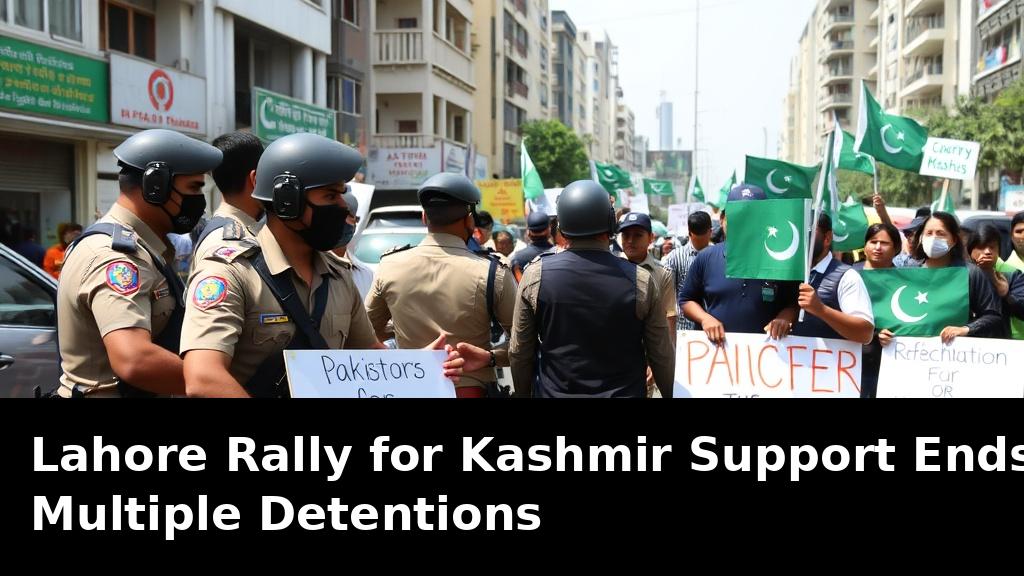
Police in Lahore moved quickly to detain several participants during a public demonstration expressing solidarity with Pakistan-administered Kashmir. The event took place in a central urban area where demonstrators gathered to voice their concerns over regional developments.
Eyewitness accounts indicate that the rally remained largely peaceful until authorities intervened. Officers dispersed the crowd and took individuals into custody for further processing. Local observers noted that similar gatherings have occurred periodically in major Pakistani cities, reflecting ongoing public interest in the Kashmir situation.
The Kashmir dispute traces its roots to the partition of British India in 1947, creating a long-standing point of contention between Pakistan and India. Over the decades, the issue has influenced diplomatic relations, security policies, and cross-border dynamics in South Asia. International organizations have occasionally called for dialogue to address humanitarian aspects and reduce tensions.
One key context is the demographic and geographic significance of the region, which includes diverse populations and strategic waterways. Economic activities in surrounding areas can be affected when political uncertainty rises, impacting trade routes and local livelihoods. Analysts often highlight how unresolved disputes may divert government resources toward security rather than development projects.
Another relevant angle involves the role of civil society groups in organizing such events. These organizations frequently emphasize the need for peaceful advocacy and awareness. In Lahore, a city with a history of political activism, rallies serve as outlets for public expression, though they sometimes lead to temporary restrictions on movement and assembly.
Security measures in response to demonstrations vary depending on perceived risks and prior incidents. In this case, the swift detentions suggest authorities aimed to prevent escalation. Legal procedures following arrests typically include formal charges or releases, depending on investigations.
Broader regional stability remains a concern for neighboring countries and global stakeholders. Periodic flare-ups can influence foreign policy decisions and multilateral discussions. Observers continue to monitor how domestic protests intersect with these larger geopolitical factors.
Public sentiment in Pakistan often reflects strong attachment to the Kashmir cause, shaped by historical narratives and media coverage. Educational institutions and community forums sometimes host related discussions to provide deeper context beyond immediate events.