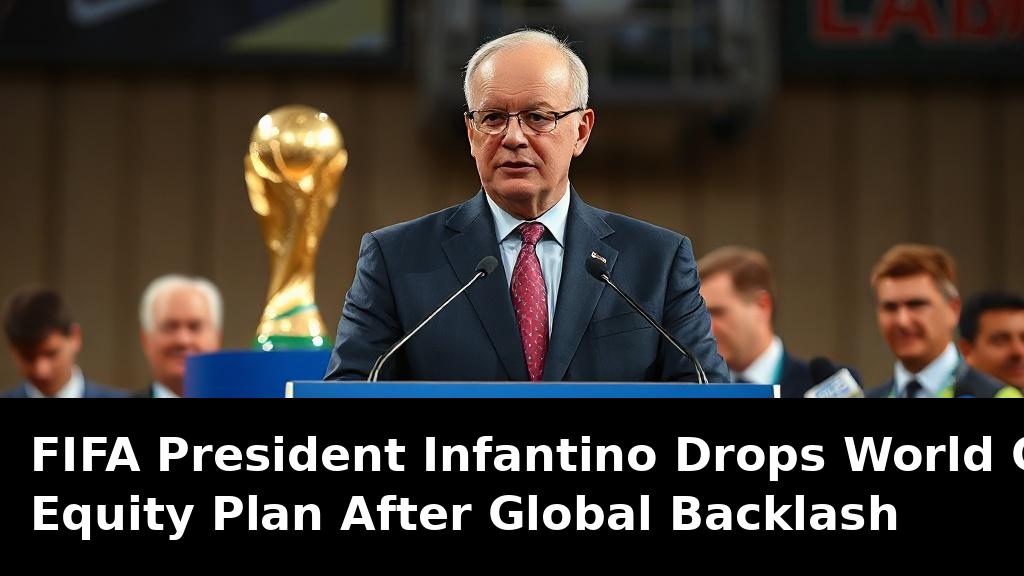


FIFA President Gianni Infantino has decided to withdraw a proposed equity investment plan tied to the expanded 2026 World Cup. The plan aimed to attract private investors by offering stakes in future tournament revenues but encountered strong resistance from football stakeholders worldwide.
The backlash emerged quickly after initial details surfaced. National associations, player unions, and regional confederations argued that the structure could shift decision-making power away from traditional governance bodies. Critics highlighted risks of commercial priorities overriding sporting integrity and long-term development goals.
Infantino’s reversal reflects the influence of collective opposition within the football ecosystem. Several confederations publicly expressed concerns that equity deals might favor short-term financial returns over investments in grassroots programs and infrastructure in developing regions.
One key context is the historical pattern of FIFA facing scrutiny over revenue distribution. Past attempts to introduce new commercial models have often required extensive consultation to maintain support from member associations, especially those reliant on FIFA funding for domestic leagues.
Another relevant angle involves the timing relative to the 2026 tournament co-hosted by the United States, Canada, and Mexico. With an expanded field of 48 teams, revenue projections have drawn significant attention from both public and private sectors, making any perceived change in ownership structure highly sensitive.
The decision also underscores ongoing debates about governance transparency at FIFA. Member associations emphasized the need for clear safeguards to prevent external investors from influencing competition rules or qualification processes.
Looking ahead, FIFA will likely explore alternative funding mechanisms that keep ownership and control within its existing structure. This approach could involve revised sponsorship frameworks or enhanced broadcasting agreements without transferring equity stakes.
The episode demonstrates how rapidly stakeholder sentiment can shape major policy shifts in international sports governance. Infantino’s move to scrap the plan restores a degree of stability ahead of critical planning phases for the next World Cup cycle.