 0
0
 0
0
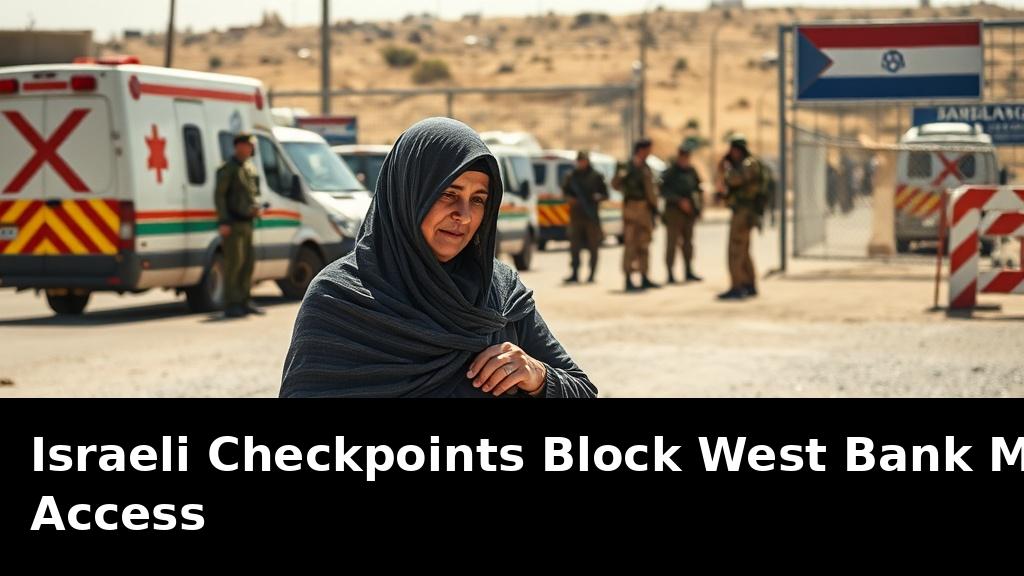
Israeli military closures across the West Bank have created severe barriers for Palestinians seeking medical care. Patients report waiting for hours at checkpoints, with some cases resulting in women giving birth outside hospitals due to the delays.
These restrictions affect routine travel as well as emergency situations. Families describe the process as unpredictable, with soldiers sometimes turning vehicles back without clear explanation.
The situation has persisted for months, leaving residents unsure when they can reach hospitals in major cities like Jerusalem or Ramallah. Ambulances are also subject to the same inspections, adding further complications for critical care transport.
One key context is the history of checkpoint policies that date back decades but have intensified during periods of heightened security alerts. Past data from humanitarian organizations shows similar patterns of delayed medical access during previous closure waves, though current conditions appear more widespread.
Another relevant factor involves the impact on chronic illness management. Patients requiring regular dialysis or cancer treatments face repeated disruptions, leading to worsening health outcomes over time without consistent hospital visits.
Local communities have adapted by coordinating informal networks to share information about open routes, yet these efforts remain limited by the fluid nature of military decisions.
The closures also strain resources at smaller clinics inside the West Bank, which must handle overflow cases that cannot reach larger facilities.