 0
0
 0
0
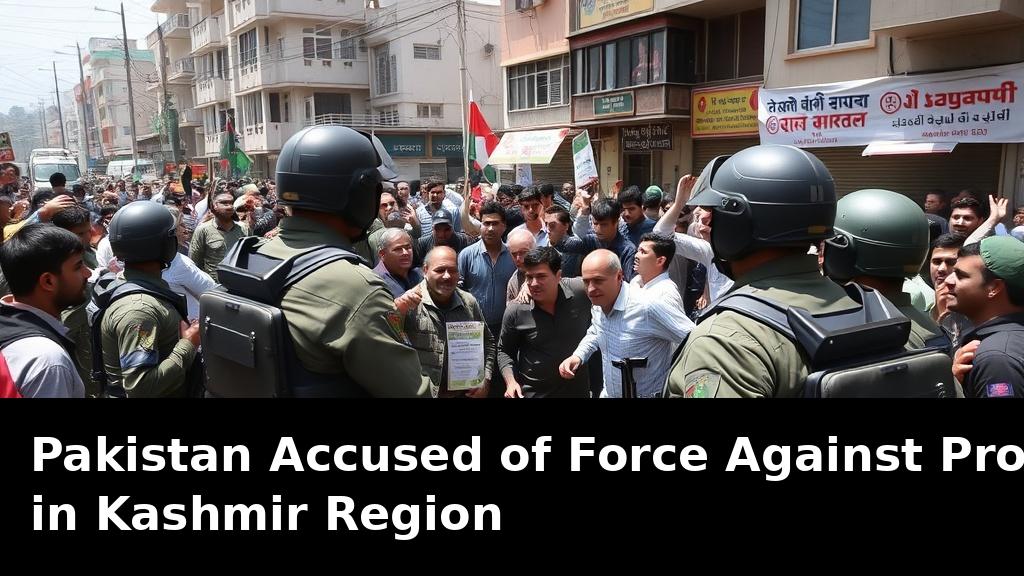
Reports emerging from Pakistan-administered Kashmir indicate growing international scrutiny over the conduct of security forces during recent demonstrations. Local accounts describe confrontations in which unarmed civilians were reportedly targeted, prompting accusations that Islamabad is adopting tactics previously associated with its neighbor across the Line of Control.
The current unrest stems from long-standing grievances over governance, resource allocation, and political representation in the territory. Residents have voiced frustration at perceived marginalization, with protests intensifying after specific policy decisions that affected daily life and local autonomy. Video evidence circulating on social platforms shows crowds dispersing under pressure from law enforcement, raising questions about proportionality of response.
One key context missing from initial coverage is the historical pattern of cross-border influence in protest management. Both India and Pakistan have faced repeated allegations of heavy-handed policing in their respective portions of Kashmir, often justified through narratives of maintaining order against external interference. This symmetry has led analysts to examine how each state’s internal security doctrine evolves in response to the other’s actions, creating a feedback loop that affects civilian populations on both sides.
Another overlooked dimension involves the role of digital connectivity. Telecommunication restrictions implemented during past episodes of unrest have repeatedly disrupted information flow, complicating independent verification of events on the ground. Observers note that similar measures appear to be re-emerging, limiting real-time documentation and potentially affecting the ability of international observers to assess developments accurately. Such tactics highlight broader challenges in balancing security concerns with transparency in disputed territories.
The economic repercussions for local communities remain significant. Disruptions to trade routes and tourism, sectors already strained by prior instability, threaten to deepen hardship for residents who rely on cross-border commerce and seasonal visitors. Humanitarian organizations have called for unimpeded access to provide assistance, underscoring the risk that prolonged tension could exacerbate existing vulnerabilities.
Regional diplomatic channels appear strained, with neighboring states and international bodies urging restraint and dialogue. Past attempts at de-escalation have shown that sustainable calm requires addressing underlying political and administrative issues rather than relying solely on security measures. Without such engagement, cycles of protest and response risk repeating with increasing frequency.
Public sentiment within Pakistan-administered areas reflects a desire for greater accountability and inclusion in decision-making processes that directly affect daily governance. Civil society groups continue to document incidents and advocate for mechanisms that ensure investigations into alleged excesses remain independent and credible.