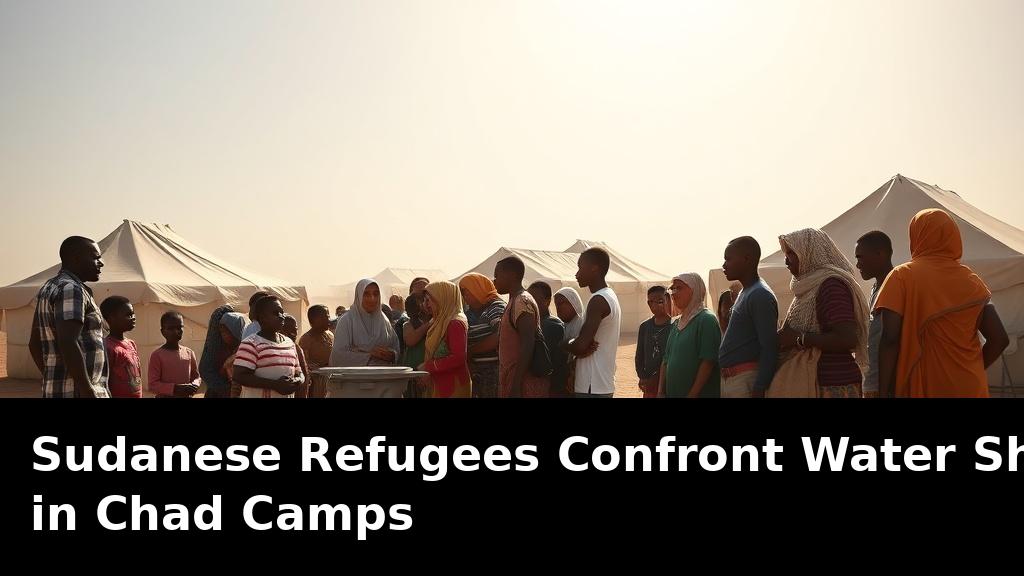


Families who fled the conflict in Sudan now face acute water shortages in refugee camps across Chad’s eastern border regions. The journey to safety has left many households dependent on limited camp resources, where daily water access falls far below recommended humanitarian standards.
Aid organizations report that water points are often shared among thousands of people, leading to long queues and reduced supplies during peak hours. Women and children bear much of the burden, walking extended distances to collect what little is available.
The ongoing crisis stems from rapid population influxes that have overwhelmed existing infrastructure. Chad’s arid climate compounds the problem, with seasonal rains providing only temporary relief before dry periods return.
One key contextual factor is the disruption of cross-border trade routes, which previously allowed some communities to supplement supplies through informal markets. This breakdown has isolated camps further from alternative sources.
Another element is the strain on local host communities, whose own wells and boreholes are now shared with new arrivals, accelerating depletion rates in an already water-scarce environment.
Without expanded drilling or storage systems, residents continue to ration usage, affecting hygiene and food preparation. Hopes of returning home remain distant as security conditions in Sudan show little improvement.
The situation underscores how displacement creates layered resource pressures that persist long after initial flight.