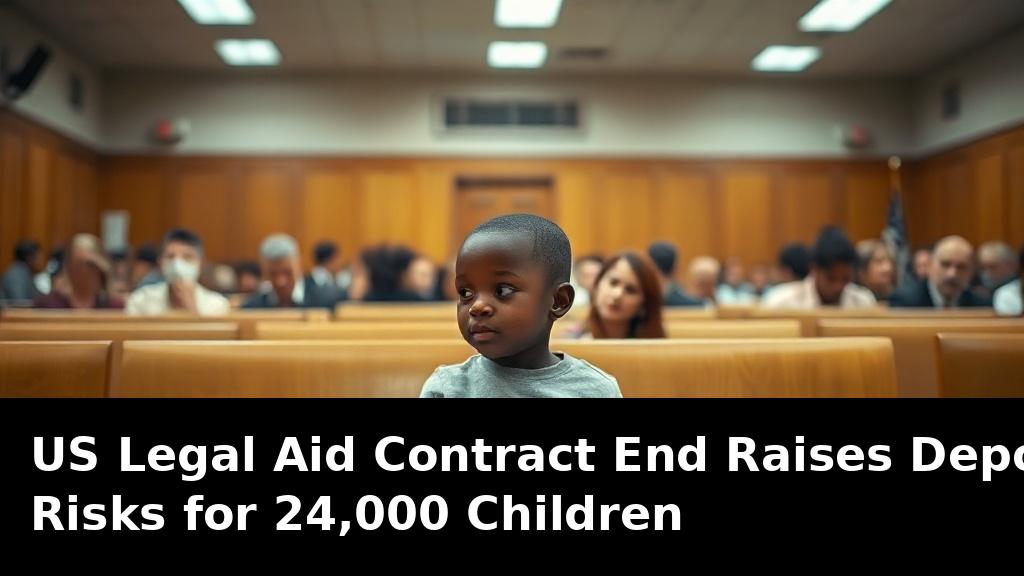


The expiration of a key federal contract for legal representation has placed thousands of unaccompanied children in the United States at greater risk of deportation. Advocates report that the contract supported legal services for minors navigating complex immigration proceedings. Without renewed funding, an estimated 24,000 children could lose access to lawyers at critical stages of their cases.
Immigration courts already face significant backlogs, and young migrants often appear without understanding the legal process. Legal aid organizations have warned that the sudden loss of representation increases the likelihood of removal orders being issued in absentia or without full consideration of asylum claims. Children who entered the country alone are particularly vulnerable because they lack family networks to assist with court requirements.
The contract in question covered services provided through nonprofit groups across several states. These organizations typically help minors file applications, gather evidence, and appear in court. When funding ends, many offices must reduce staff or stop accepting new cases. This creates immediate gaps in coverage for children whose hearings are scheduled in the coming months.
One additional factor is the role of state-level programs that sometimes supplement federal funding. However, these programs vary widely in scope and cannot fully replace the scale of the expired contract. Some states have attempted to redirect resources, yet the overall capacity remains insufficient to meet demand. Another consideration involves the impact on court efficiency: judges have noted that cases with legal representation tend to proceed more smoothly, reducing repeated hearings and administrative delays.
Advocates emphasize that the loss of counsel does not change the underlying legal standards for asylum or other protections. Instead, it affects the ability of children to present their circumstances effectively. Data from previous years shows that represented minors have higher rates of successful outcomes compared with those appearing alone. The current situation therefore amplifies existing disparities in access to justice within the immigration system.
Stakeholders continue to press for a new agreement to restore services. Until then, nonprofit networks are exploring limited pro bono options and community outreach to mitigate the immediate effects on affected children.